Water softener installation
Water Softener Installation in Palm Beach and Broward Counties
Hard water leaves spots, film, and scale. A true softener uses ion exchange to swap hardness minerals for sodium or potassium in a resin bed. Salt-free conditioners are a different process—and a softener is not a whole-home contaminant filter.
Hardness, household effects, and your options
Hardness is dissolved calcium and magnesium in water. When water dries or is heated, these minerals can leave spots and scale on fixtures and water-using appliances. A hardness measurement helps distinguish mineral buildup from other residue.
Mineral residue may leave hair feeling dull, dry, coated, or harder to manage. Some people notice dry-feeling skin or a residue after showering. These are household comfort observations, not medical claims; water feel alone does not measure hardness.
SpenceCo’s residential recommendation policy is to recommend softening above 3.5 GPG, subject to chemistry, equipment, and site checks. From 0 through 3.5 GPG—including exactly 3.5—softening is optional for customer preference when appropriate. Missing hardness means a measurement is needed. This is our recommendation policy, not a health, safety, regulatory, or universal industry threshold; lower readings still may contain hardness.
We measure your water, discuss your goals, and check the installation before selecting equipment. Carbon filtration addresses different treatment goals, so a softener and carbon filter are considered together only when the assessment supports both.
True ion-exchange softening
How a true softener works
The resin tank is where hardness minerals are exchanged. The brine tank holds salt (or potassium chloride) used to regenerate that resin. A bypass valve lets the home be serviced without shutting water off to the street.
Softening addresses calcium and magnesium hardness. It does not remove chlorine taste, iron, sulfur odor, or other contaminants that need different treatment. For chlorine-related taste and odor, you want whole-home carbon filtration.
When the assessment supports both filtration and softening, we can discuss the whole-home water system recommendation.
What softening does in the home
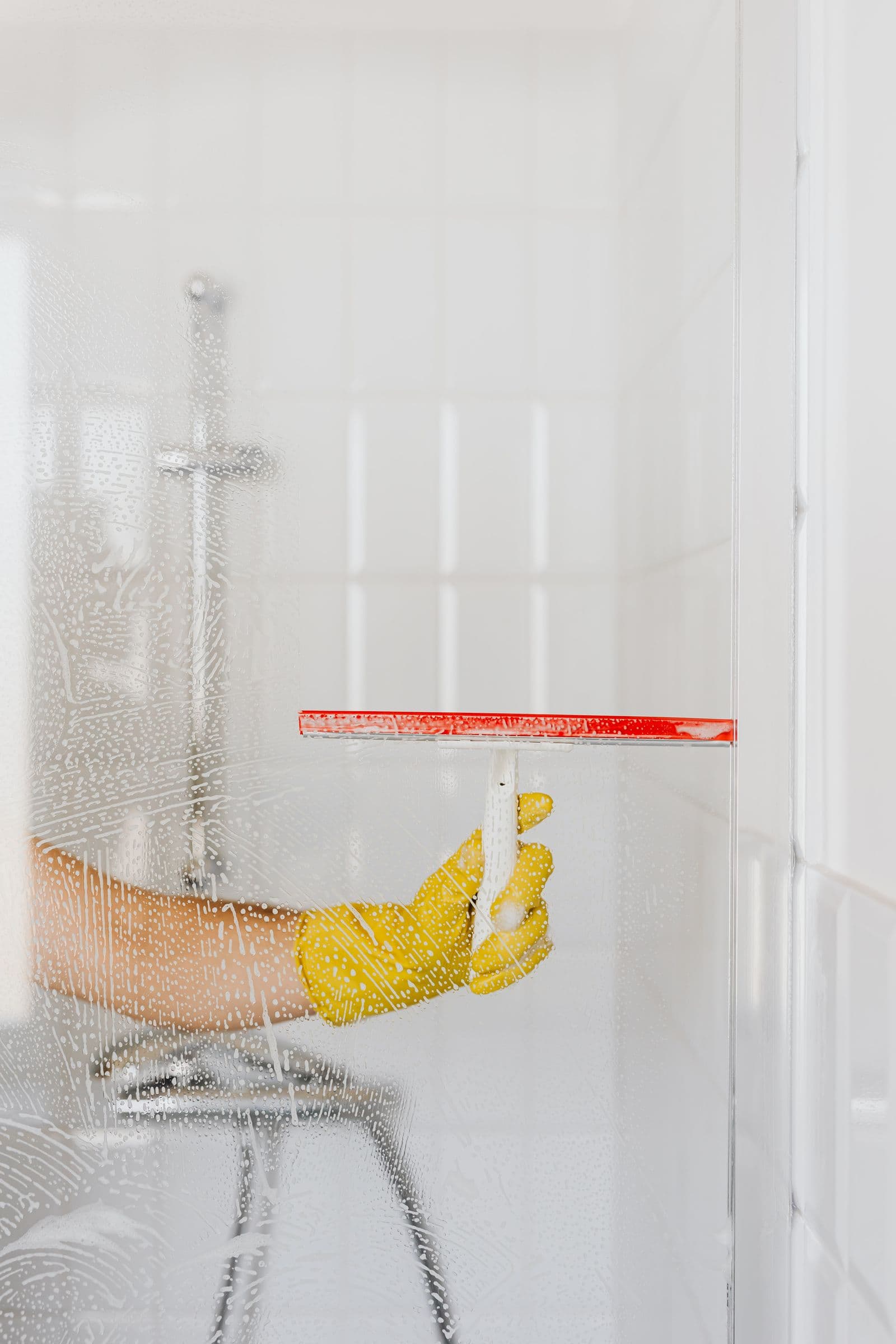
Expect easier soap use and less new scale on fixtures.
Softened water lathers differently. New spotting on glass shower doors and chrome should ease. Existing scale inside an old heater or valve is not removed overnight.
Outdoor windows in coastal Delray and Jupiter still collect salt air. Indoor fixtures are the clearer win. If drinking-water taste is the remaining issue after softening, optional reverse osmosis is the kitchen-tap conversation.

Bathroom and laundry
Hardness shows up where water dries on glass and fixtures.
Spots and film are reasons to test, not a measurement by themselves. Hardness varies with the supply and any existing treatment. We use your household reading rather than assuming a value from your city.
Start with a free in-home water test so we measure hardness at your tap before recommending a tank size or install path.

Personalized whole-home treatment
Get the Treatment Your Home Really Needs
Your home and water are different. We'll help determine the right treatment before recommending a system.
Your recommendation and water details help us confirm the right system and installed quote. Any additional work is quoted before installation.
Final recommendation and pricing depend on water conditions, plumbing configuration, home requirements, and any unusual installation conditions. Extra plumbing, electrical, outdoor placement, or non-standard materials are quoted before installation.
Whole-home carbon and softening are commonly discussed for municipal-water homes. Private wells are reviewed separately and may need different equipment or testing.
See What My Home Needs
Professionally installed after your recommendation
Included
- Whole-home carbon filtration + true ion-exchange water softener when recommended
- Professional standard installation
- Basic installation materials
- 3 Months of SpenceCo White Glove Included With a Qualifying New SpenceCo System Installation
- Required free in-home water test and site survey
Optional upgrade
- Under-sink reverse osmosis, priced separately when recommended
Personalized path
Not sure if softening is what your home needs?
Hardness is common in South Florida, but the right answer still depends on your taps, fixtures, and goals. See what treatment categories fit your home before we talk tank size.
FAQ
Softener questions
What is true water softening?+
Ion exchange. The system swaps hardness minerals (calcium and magnesium) for sodium or potassium. That is softening. Salt-free conditioning is a different process and is not equivalent.
Will a softener make my water taste salty?+
A properly set up residential softener should not make household water taste like seawater. If drinking-water taste is the priority, we can add optional reverse osmosis at the kitchen sink.
Does a softener use salt?+
Yes. A true ion-exchange softener uses salt (or potassium chloride) in a brine tank to regenerate the resin. That salt is not dumped into every glass of water as table salt would be; it is part of the regeneration cycle.
Service areas we prioritize
Browse priority Palm Beach County and Broward County markets, then request a free water test for your address.
Palm Beach and Broward counties
Schedule Your Free Water Test
We perform an in-home field assessment of treatment-relevant conditions, look at the incoming line, and help determine which treatment options make sense—before recommending a system or installed quote.